Greetings VUEmbers,
I often get question about lenses. Which lens is good? Which zoom is better? Which prime is the best and similar stuff. Then recently it just came into my mind ..... why not lets make a kind a short guide which is based on my limited experience and it will help every one regardless of the photography level one is from. So, let's start the guide. But before we start, allow me to clear this point that, my selection of lenses is based on several criteria among which one is cheap price which could lead to cheap manufacturing quality or superior optical quality which will also leads to some higher price of the lens (even as used), so every thing that you will be reading is a mixture of many attributes which will I be trying to write along with the lens to make better understanding …. And being hardcore Nikon shooter, these choices are for Nikon F-Mount only. Also note that i have used my own examples for reference, so if you are not satisfied with any of my image, you are free to google about that lens and get millions of other sample photos to verify about the lenses which i am going to write. Shall we begin ?
I will be diving the lens into 2 broad categories,
1- Prime Lenses
2- Zoom Lenses
Each of these categories is further divided in 2 sub category which is Full Frame & APS-C (AKA Crop Sensor). So in short we will be having 4 categories in general,
A- Prime APS-C
B- Zoom APS-C
C- Prime Full Frame
D- Zoom Full Frame
So let's start discussing each category one by one.
A- Prime APS-C: I consider the following lenses the best in this category and they are not many.
a. Nikon 10.5mm f/2.8G DX Fisheye lens. The best of the best out there when it comes to fish eye. Nikon is world leader in making the best Fisheye lenses. Sample image for this link can be seen using this link. Now you may be thinking about the full frame version from Nikon. Wait for the Full Frame turn.
b. Nikon 35mm f/1.8G DX. If someone ask me to give us the example of the best lens at the cheapest price, I quick quote this lens. You can check the sample images using this link.
B- Zoom APS-C: Following are the best APS-C Zoom Lenses for the Nikon F-Mount.
a. Nikon 17-55mm f/2.8 DX: That lens is expensive, but it is built like a tank and worth every single penny due to its superior optical performance. Test sample can be viewed using this link.
b. Nikon 12-24mm f/4G DX: Now many of you might think why not 10-24mm f/3.5-4.5G DX? Why this one? Well reason is simple. This 12-24mm f/4G DX lens is made in Japan and its optically way superior then 10-24mm version. 2mm should not be an issue for you guys. The monochrome images taken from this lens stands out on their own. Sample image can be find using this link.
c. Tokens 11-16mm f/2.8 DX: Somehow Tokina discover the secret sauce of making better and sharp (edge to edge) ultra wide-angle lenses for APS-C sensor size camera. In case if you are looking for cheap ultra wide-angle lens with f/2.8 aperture then this is the only choice you will get at the moment. No other manufacturers are making ultra-wide f/2.8 lenses for the APS-C size sensor camera bodies. This lens has 2 version. Both are optically superior. I own its first version who’s sample images you can find using this link.
C- Prime Full Frame: When it comes to prime full frame lenses Nikon got a century years old legacy and experience in hand. There are so many lenses out when it comes Prime lenses, but I will try to be brief and refined the list of the best of the best here.
Starting with, all the f/1.8 G type lenses from Nikon are optically superior and they all are damn sharp lenses and renders images way better then their f/1.4 big brothers (some of them truly are). The focal lengths that I am referring for f/1.8 aperture lenses are 20mm, 24mm, 28mm, 35mm, 50mm & 85mm. All of them are damn sharp and the Best Buy for your Nikon F mount DSLR cameras.
Starting with, all the f/1.8 G type lenses from Nikon are optically superior and they all are damn sharp lenses and renders images way better then their f/1.4 big brothers (some of them truly are). The focal lengths that I am referring for f/1.8 aperture lenses are 20mm, 24mm, 28mm, 35mm, 50mm & 85mm. All of them are damn sharp and the Best Buy for your Nikon F mount DSLR cameras.
a. Nikon 20mm f/1.8G: Best out there. Best for color reproduction and micro contrast. The only disadvantage this lens have which is its body is made in plastic so people get this impression that the optical performance wont be that good like its body which is not the case at all. Sample images can be find using this link.
b. Sigma 20mm f/1.4 DG Art: That lens is literally comes with mind boggling performance. I used that lens for few times, and I stunned with its optical performance. I guess Sigma finally able to crack the code of making some nice wide-angle lenses with rich color reproduction and high contrast. Sample images can be find using this link.
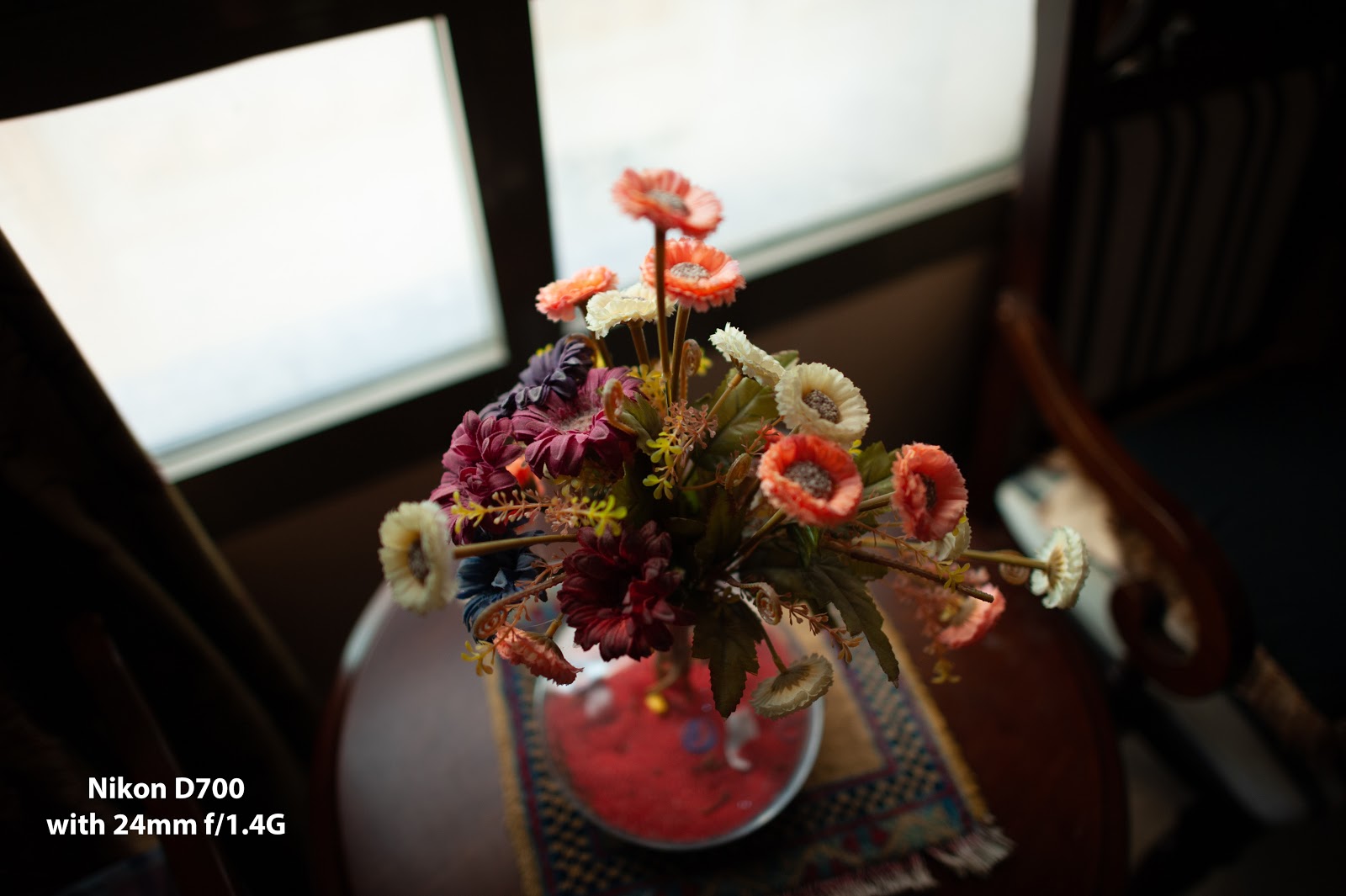
c. Nikon 24mm f/1.4G & f/1.8G: Both big and smaller brother are optically way superior and deliver image quality which can expect from Nikon. The Big brother f/1.4G comes with very heavy price tag but it literally worth every single penny of it. Where as the little brother f/1.8G is totally opposite to its big brother when it comes to appearance and weight. Sample images for f/1.4G can be find using thislink & for f/1.8G here.
d. Nikon 28mm f/1.4D / 28mm f/1.4E / 28mm f/1.8G: If you ask me, I would love to go straight with the legend 28/1.4D. Reasons are, it’s built quality, superior optical performance and its over all image rendition. This lens literally creates image in 3D. Don’t believe? Then check out this link and see by yourself. But keep that in mind, this lens is freaking expensive because it was made on limited scale. Still today this lens on eBay cost between $2000 ~ $4000 which is far far expensive than its f/1.4E version. Now for the rest of the 28/1.4E and 28/1.8G, both are exactly like 24mm f/1.4 & f/1.8 versions. Both are optically superior, but one is tough built and its heavy (f/1.4 version) and one is made by cheap plastic and its light weight (f/1.8).
e. Carl Zeiss 35mm f/2 ZF-2: If you ask me which of the sharpest lens you ever used, my answer will be this lens. Carl Zeiss made this lens in such a way that its sharpness is literally inter-galactic. Now you may wonder well this lens is f/2, not even f/1.4. Well for me I care about over all image quality which lens renders. It’s not always about sharpness all the time. Sample images of this lens can be find using this link.
f. Nikon 35mm f/2D: This is one little cheap lens which is very underrated by all photographers. Note that this is the only lens in this category which gives you much close focus with the subject unlike other prime which can out of focus the background at f/2 in such a way (thanks to short distance focus) which make it equal to f/1.4. The contrast, colors, sharpness of this lens is off the chart. And the best part is, it's very cheap. Sample images from this lens can be seen using this link.
g. Nikon 55mm f/1.2 AI-S: When it comes to fifty-nifty lens category, I have experienced many lenses in this category but this 55 f/1.2 AI-S stands out with pleasing image rendition which you wont able to find in new G-type or D-Type 50mm from Nikon. Sample images from this lens can be seen on this link.
h. Voigtlander 58mm f/1.4 SL II: This lens is not the sharpest lens. I am telling you right now. Now you will be wondering why I am recommending it. Well as I have written above, sharpness is the only quality that you need to look upon. This lens renders the image so beautifully that it makes you fall in love with this lens in no time. This lens literally renders the background like a melted strawberry vanilla ice cream dripping from your hand on the ground and making interesting design. Sample images of this lens can be seen using this link.
i. Nikon 60mm f/2.8D: This is a Swiss Army knife lens. A multi-purpose lens. It is not only a macro lens, but also portrait and general-purpose lens. It renders the image like a painting. I am not exaggerating. Don’t believe me? See it by yourself using this link.
j. Carl Zeiss 85mm f/1.4: When it comes to 85mm lens category, there are many choices out there. Some are manual focus like this one and some are with Auto Focus. After going through hundreds of images from many people I concluded that when it comes to 85mm category this lens is ranking on the top. Sample images from this lens can be seen using this link.
k. Nikon 85mm f/1.8G: This is the sharpest 85mm in any form or category when it comes to Nikon. This lens is not only sharp but also light weight and comparatively compact to its big brother which is not that a great lens. Black and white images right from the camera without any touch up using this lens is un-parallel. Sample images from this lens can be seen using this lens.
l. Sigma 85mm f/1.4 Art: Sigma finally able to decode the formula of making lenses which not only corner to corner sharp but also rich in colors. I highly recommend this lens over Nikon 85mm f/1.4G. Sample images can be seen using this link.
m. Nikon 105mm f/1.8 AI-S: 105mm is my most favorite focal length when it comes to taking portraits. After going through several 105mm lenses, I rank this lens like this, if you want best Bokeh and melting Background then use this lens. This lens literally renders the image 3D on 2D screen, that’s how special this lens is. Keep that in mind, its manual focus lens. Sample images can be seen using this lens.
n. Nikon 105mm f/2 DC: OK, you want Bokeh just like above mentioned 105/1.8 AI-S with some artistic render and also want Auto Focus then this lens is for you. The micro-contrast that this lens produces is literally off the chart. If you are into B&W portraiture, then this lens is a MUST BUY. Sample images can be seen using this link.
o. Nikon 105mm f/2.5 AI-S: If you want cheapest, sharpest lens which generates the image which requires NO post processing at the cost of less Bokeh, then this lens is for you. BTW, this lens is so small that it fits in your jeans pocket easily. This is the sample lens which was used by Steve Mc Curry to capture his all-time famous image the “Afghan Girl” which took the world by storm when published over the National Geographic cover page. Sample image can be seen using this link.
p. Pentax 6x7 105mm f/2.4: Ok ….. this is a medium format lens. It’s basically designs for Pentax 6x7 format which is HUGE … literally. This is basically 50mm f/1.2 full frame equivalent if we are talking about same angle of view on both 6x7 and Full Frame. But its focal length is 105mm f/2.4 so on digital camera you use this lens is always remains 105/2.4. Now coming back to its performance. To be honest, it is hard for me to decide is this is my most fav. Lens or Nikon 105/1.8 AI-S? This lens produces images which are sharp as Razer, very rich in colors & contrast. Also, this lens is comparatively small in length when it comes to other 105mm lens. Sample images can be seen using this link.
q. Carl Zeiss 135mm f/2 APO Sonar: Talking about perfection, OTUS class output at cheaper price than you need this lens. Though its kind a moderately expensive lens but still cheaper then OTUS. At high mega pixel machine, this lens literally opens up the mistake that you did like anything because is so damn sharp. Sample images can be seen using this link.
r. Nikon 135mm f/2 AI-S: If you not able to get the above mention monster from Zeiss, then Nikon have 135mm f/2 AI-S for you. It’s manual focus heavy lens. For Auto focus you need 135mm f/2 DC lens which I never recommend you because it is not so good lens. Sample images can be seen using this link.
s. Nikon 135mm f/2.8 AI-S: If you need further compact glass in size and weight along with superior performance then you need this lens. It’s a manual focus lens. Sample images can be seen using this link.
t. Mayer Optik Gorlitz 135mm f/2.8: When I first used lens I was like ….. WTH!!!! The output from that lens is so damn incredible that I didn’t have to post process my image at all. Don’t believe me? Take a look by yourself using this link.
u. Nikon 180mm f/2.8D: This lens literally PAINTS the image. People talk about the best portrait lens is 200mm f/2. Well they have no idea how incredible this lens is. The out from this lens is sharp as hell and the color, contrast which this lens produces is super amazing. If you want images which requires no post processing at all then I highly recommend this lens. Sample images can be seen using this link.
v. Super Takumar 200mm f/3.5: This lens is very unique and special. After learning about this lens, I literally searched this lens on eBay & Amazon but not able to find at all, and guess where I found it? …. In Pakistan J. This lens exhibits special characteristics like beautiful color rendition, high contrast, super micro-contrast (the low level internal tonal details). It’s a manual focus lens and its heavy in weight. Sample images can be seen using this link.
w. Nikon 400mm f/3.5 AI-S: This Lens is a tank …. And I mean literally a tank in terms of making, size, weight & durability. Typically, lenses are mounted on the camera bodies. In this case its other way around. This lens is a manual focus lens so not an ideal lens at all for shooting wild life, birding and action photography ….. unless you are so use too of this lens and so pro-active in judging the next action of a wild animal/bird and can pre-focus with the addition of firing the shutter release in burst, only then you can use this lens for action/sport/wildlife/birding. Besides, I have done taking some portrait shots using this lens. The output of this lens is incredible, rich with color, high contrast and very sharp. Sample images can be seen using this link.
D- Zoom Full Fram: This category got many choices so I will try to be brief here. When it comes to zoom lenses for Nikon, we are having 2 types of Nikon “Holy Trinity” set of lenses. One is old and other is new. These set of trinity lenses covers the focal lengths from ultra wide angle all the way to telephoto. Not only they are covering your desire focal lengths they also are all the way damn sharp, renders image to the highest optical quality. Here is the list.
The NEW Holy Trinity of lenses is based on the below 3 zoom lenses.
- Nikon 70-200mm f/2.8 E FL VR (old VRII ver. is no where close to FL ver. In terms of over all quality)
The OLD Trinity lenses is based on the below 3 zoom lenses. Note that when it comes to SOOC image with no editing requires, you should focus on this list at the first place.
- Nikon 35-70mm f/2.8D
The only difference between the old Trinity lenses and new is obviously price difference, VR functionality, less CA which new generation of photographers thinks as a mandatory. Note that to nail the focus VR function is present in the new 24-70/2.8E and new 70-200/2.8E FL version which is missing in the Old set of Holy Trinity. I used to own the new trinity lenses which I sold over the period of time (still have 14-24mm f/2.8G) and switched to old Nikon trinity lenses which making me feel happy because the images from these lenses are incredible. Watch a brief video where I was showing the lenses using this link. Other best Zoom lenses for the Nikon F-Mount are as follows with their own example by clicking on each,
- Nikon80-200mm f/4.5 AI-S (this is my most fav lens in 70-200mm category)
I hope you guys liked this brief introduction for the best lenses for Nikon F-Mount with examples which I came across over the years of time. So, I thought let’s compile a document where I will be explaining in brief about each type of category with example to get the best out from them. Please feel free to share it in your circle so all can get benefit from it.
Thanks,
Babar Swaleheen